Mapster has performed mobile mapping and traffic safety studies on over 60 thousand miles of roadway. Mapster also has hundreds of software clients all around the United States ranging from the great state of Ohio to Florida, New York and California.
A cleaned capture of State Route 163 brings roadway imagery and LiDAR together in Atlas, the map and 3D workspace inside MapsterStudio. The examples below follow the same route from the road view to an observation your team can discuss.
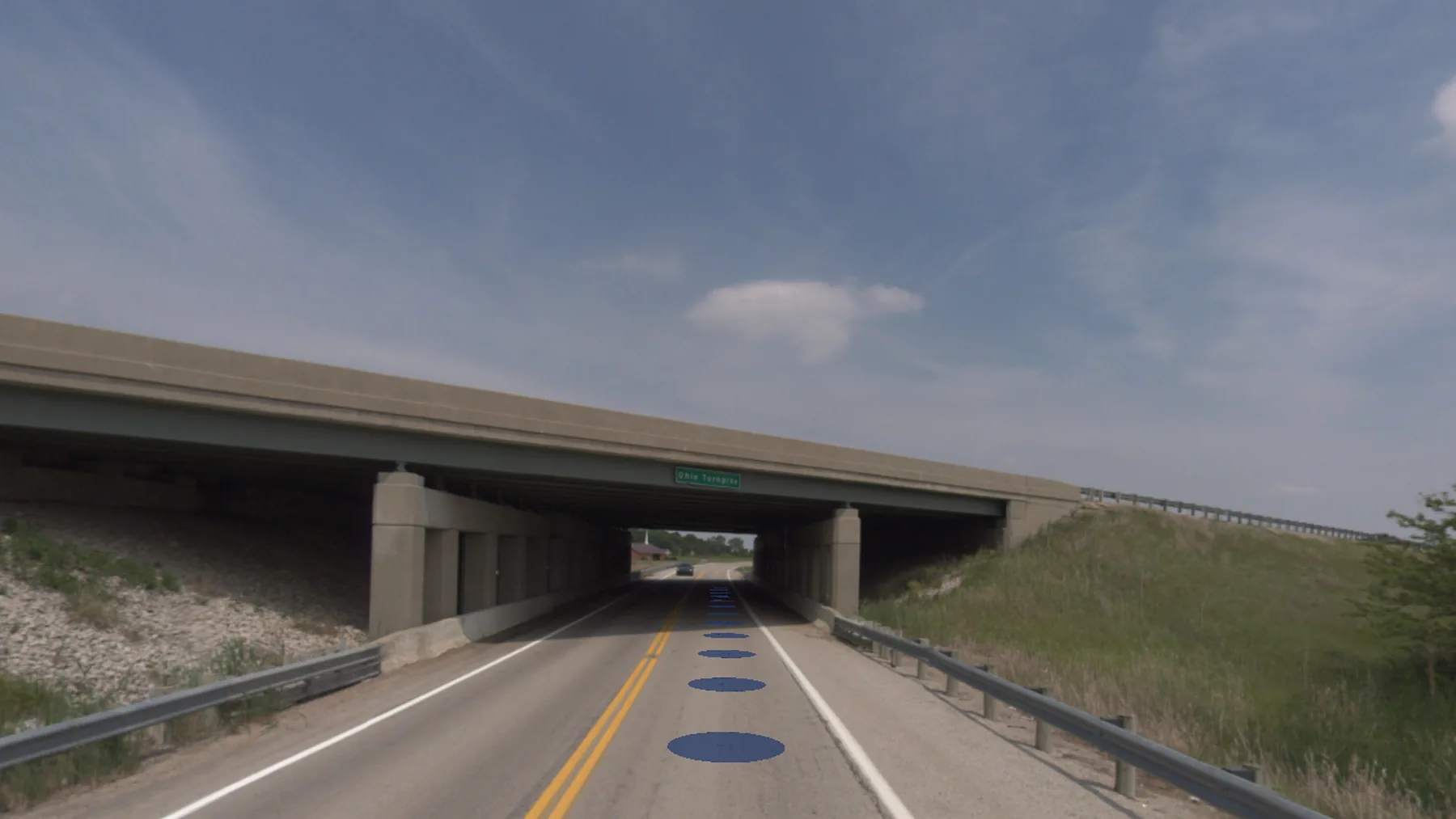
Enlarge sr 163 roadway context ↗Start with the roadway context: the approach, lane markings and structures visible in the captured imagery.
1. Find the question in the imagery.
Locate the bridge, rail crossing, utility pole or curve. The image helps the reviewer understand which feature is being discussed and what surrounds it.
2. Examine the captured geometry.
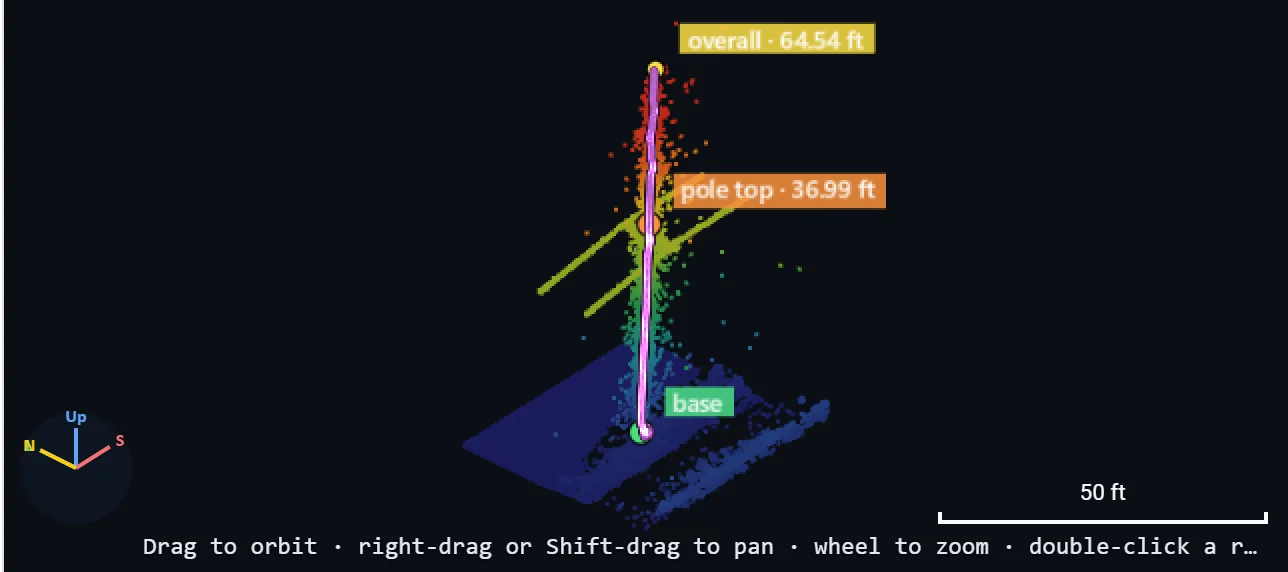
Switch to the LiDAR view. In the recorded examples, Atlas examines the space below the bridge, the road profile at the CSX crossing, the shape of a utility pole and sight lines along the curve.
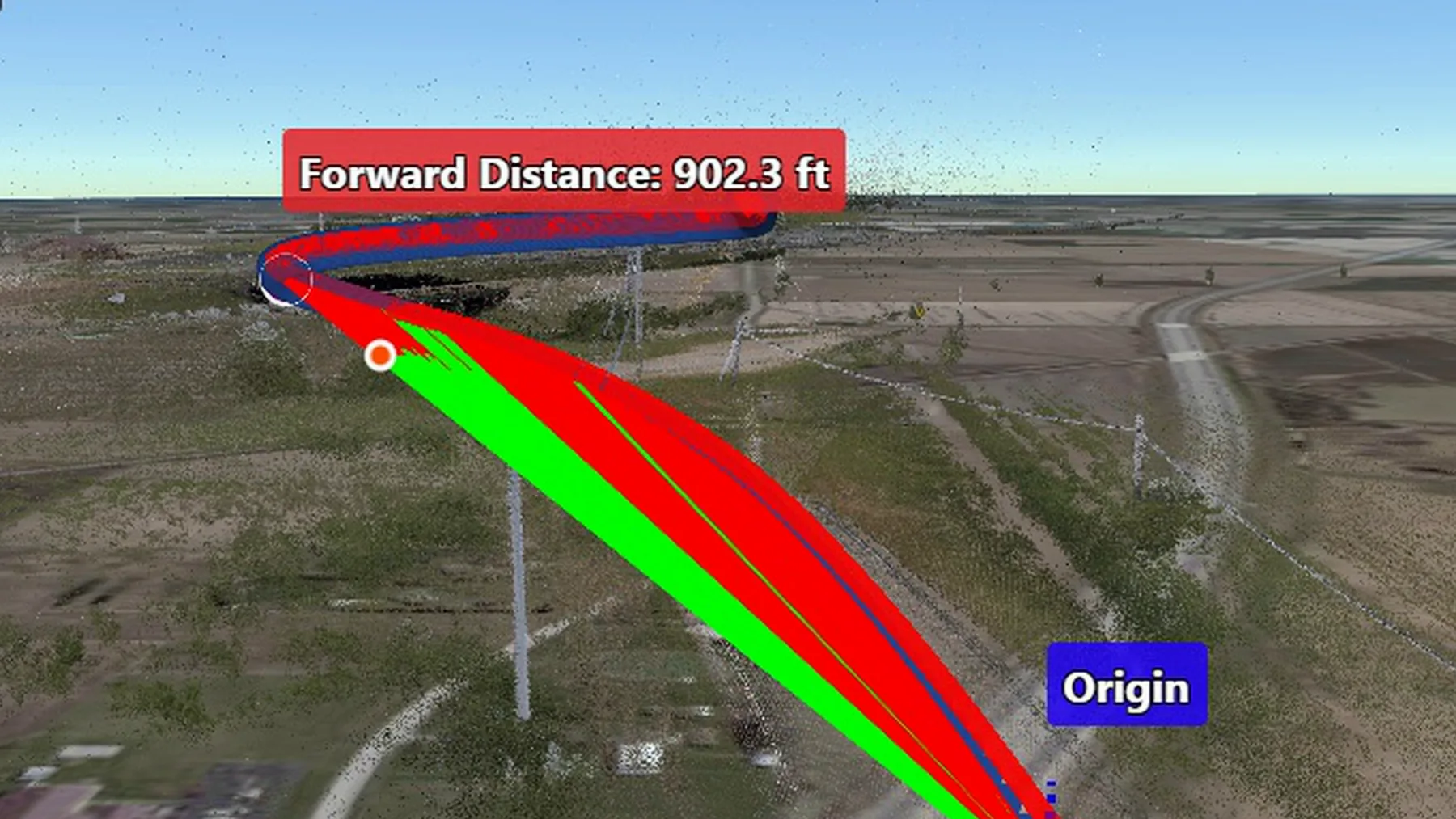
Enlarge sr 163 sight-line view ↗The curve demonstration compares sight lines through the captured scene. A colored result belongs to the selected viewpoint and settings.
3. Make the observation reviewable.
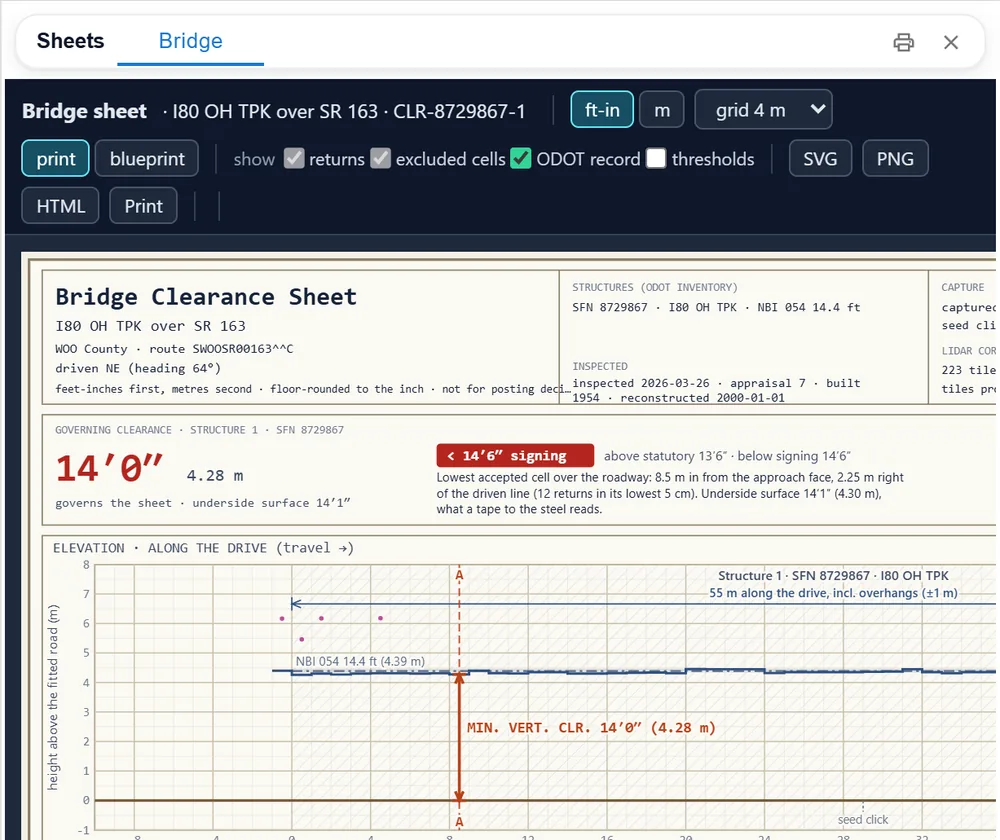
The bridge clip shows a draft clearance sheet; the other clips show a profile, a fitted pole and sight-line views. Together they illustrate how imagery, measurements and visual context can support an engineering discussion.
These are recorded workflow demonstrations, not a completed study or certified findings for the route. Capture coverage, tool settings and field verification matter when using a measurement for a decision.
These recorded examples all come from a single June 2026 drive of State Route 163 in Wood County, Ohio. They are draft measurements from MapsterStudio, shown as they appear to a reviewer. Tool settings and field verification remain part of an engineering decision; the clearance sheet is not a posting decision.
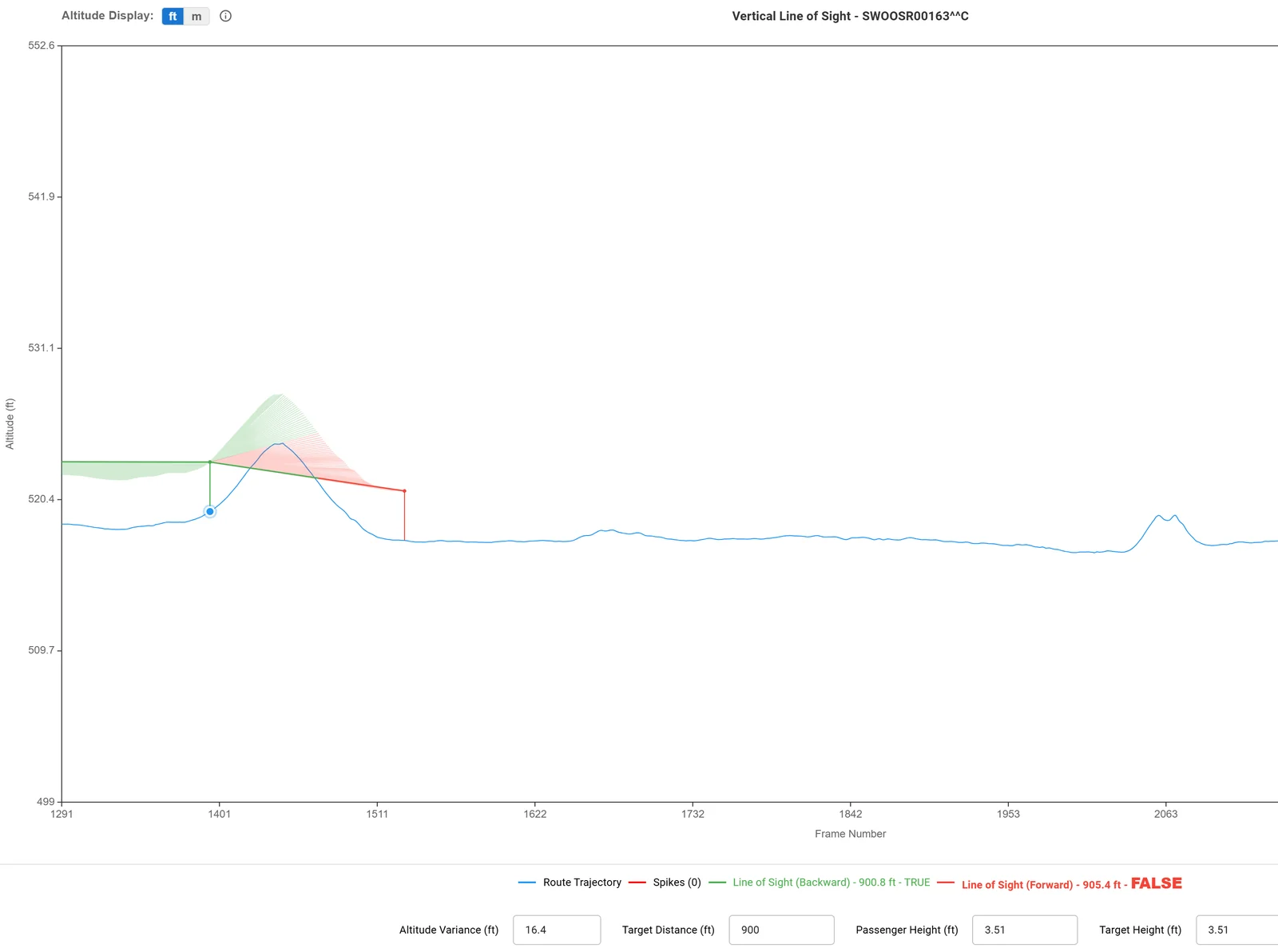
Enlarge draft clearance worksheet ↗Draft clearance worksheet: inspect captured surfaces and the selected measurement beside an elevation view. This recorded example demonstrates the review workflow; it does not establish the bridge’s final clearance.Enlarge sight-distance profile ↗A 900-foot sight-distance check at the CSX crossing: the backward sight line is clear (green); the forward line meets the crest (red).Enlarge pole fit ↗Draft pole fit: inspect the selected base and pole top separately from the overall feature extent. Values shown illustrate the fitting workflow and are subject to review.
Study deliverables such as graphical logs, T-mark tables, inventories and GIS exports follow the same review. How we check our work ↗
Featured program · Ohio Department of Transportation · 2024–2026
A statewide roadway program.
Our Ohio Department of Transportation program brings mobile mapping, centerline inventory and no-passing zone studies to an undivided U.S. and State Route network of about 14,000 centerline miles across all 12 ODOT districts.
Ohio Department of Transportation · statewide routes
The need: a current centerline inventory and no-passing zone study across the state’s undivided U.S. and State Routes.
The work: route collection and analysis recorded from 2024 through 2026, using 360° cameras, LiDAR and positioning data.
The output: roadway imagery, LiDAR, centerline inventory and no-passing zone results organized for review in MapsterStudio, including Atlas.
The mileage describes the study network, not a claim that every route or deliverable is complete. The SR 163 examples above show how one capture can be reviewed.
From an observation to a work plan.
These completed projects show how the capture, analysis and delivery fit together. Project descriptions below summarize the published 2024 archive.
Tuscarawas County · roadside hazards
The need: organize roadside hazards across 461 miles of county-maintained roadway.
The work: inventory fixed objects and slopes against criteria approved for the study.
The output: located hazard records in RailMaster, with work items the agency could organize and prioritize.